



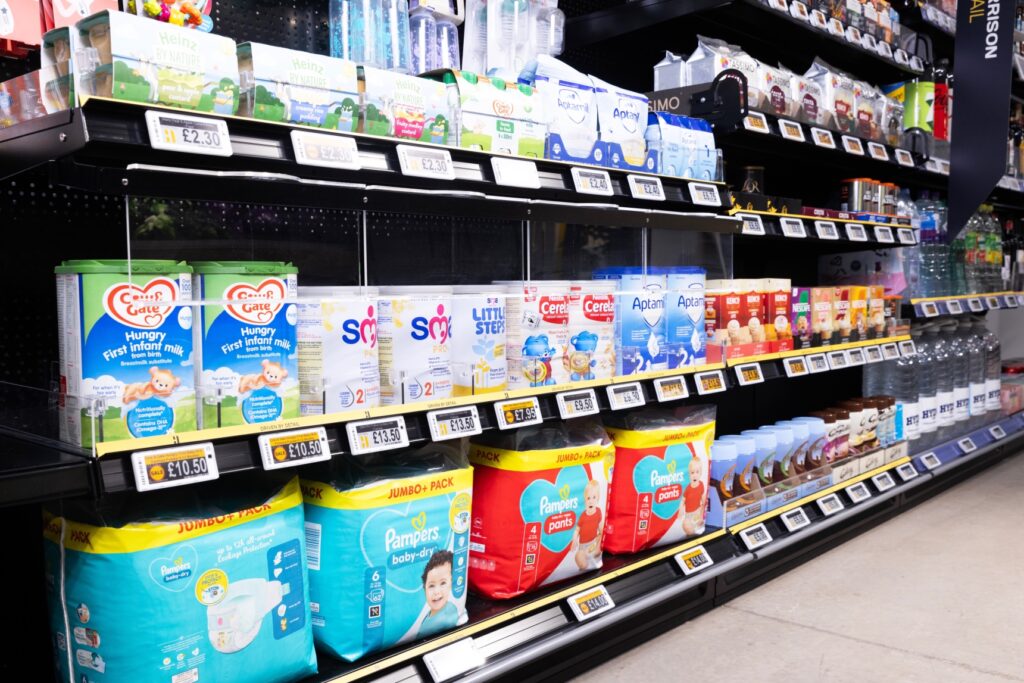
ESLs are prone to instore damage from trolleys, customers and falling products.
In 2024, the retail landscape has continued to evolve rapidly, with leading retailers adopting the best solutions to increase efficiency and improve customer experience. In recent years, ESLs (Electronic Shelf Labels) have been viewed as the next big thing for accurate price communication and inventory management for retailers. The new technology can display centralised pricing updates on shelves, driving a surge in adoption. Recent studies estimate that the ESL market will be valued at $2.8 billion by 2028, with Europe holding the largest share of the expanding market.
In September, it was announced that electronic labels integrating dynamic pricing could be adopted by all the leading UK retailers, moving away from traditional yellow bargain labels. Further evidence of adoption includes Lidl implementing ESLs into 35 stores by the end of 2024 to save on paper and ink consumption. However, according to the leading retail POS solution provider, Harrison Retail, ESLs are an expensive investment and must be protected from potential in-store damage.
“Retailers must ensure that they integrate POS shelf solutions to protect their ESLs when installing them in their stores for increased accessibility and reduced damage”, said Daryl Bedford, Managing Director at Harrison Retail. “ESLs are high cost, when compared to regular paper price labels and are prone to damage from trolleys and falling products in store. Electronic shop labels must be made of retail-proof, durable material as they operate in conditions prone to suffering extensive physical stress daily.”
Bedford continued, “ESLs secured to the bottom of shelves are prone to damage from customer trolleys when shopping in stores, especially during peak seasons. This can be resolved with bumper rails that repel any trolley damage, providing the unit with a longer lease of life. Furthermore, the introduction of hinged ESL rails enables retail staff to access the back of an ESL, simply, without risking any damage, and enables retailers to angle ESL to maximise price visibility for customers.”
“The ESL evolution is here, and retailers must integrate POS on shelf solutions to safeguard new installations in-store. These new technological pricing innovations are a fantastic addition to the retail sector but are costly. To protect their investment, retailers must adopt POS solutions such as bumper rails and hinged rails to increase their ESL’s longevity and accessibility leading into 2025”, concluded Bedford.
—
Harrison Group is a leading Point of Sale partner for retailers across the globe. With 28 years of experience, Harrison designs and manufactures innovative product displays and provides flexible, tailored solutions to help customers maximise sales and enhance shopper experiences.
From shelf mounting and floor standing products to data strips and display hooks, Harrison produces quality retail solutions for any environment in its two UK warehouses and bespoke acrylic fabrication site.
Harrison continues to push the industry forward by putting sustainability, design, and customer care at the heart of the business and are trusted by Morrisons, B&Q and Aldi to name a few. For more information, please visit: https://www.harrisonretail.com/




More Stories
Coleg Cambria powers business growth and skills revolution across North Wales
Rapid Fusion fires up Prometheus launch with new international collaboration
Lawyer calls for action ahead of International Day to end Violence Against Women