




Britons are being encouraged to keep emergency supplies at home as the Government steps up preparations for everything from extreme weather and cyberattacks to major power cuts. But does the warning mean something serious is coming – and what would actually happen if a major disaster struck the UK tomorrow?
Headlines telling British households to prepare for emergencies can sound frightening.
Yet behind them is a genuine change in the way the UK Government is approaching national resilience.
An updated National Risk Register was published in July 2026 alongside plans for a national public awareness campaign designed to help people prepare for emergencies including extreme weather and cyberattacks.
The Government has also warned that Britain is facing a rapidly changing risk environment, encompassing climate change, cybercrime, hostile state activity, infrastructure disruption, pandemics and international instability.
That does not mean officials believe a catastrophic event is about to happen.
But it does mean the Government increasingly wants households to be capable of looking after themselves during the first few days of a serious emergency.
And a new warning about the resilience of Britain’s food supplies has added urgency to the debate.
Why Are UK Households Being Told To Prepare?
The Government’s approach is essentially based on one simple problem: many very different emergencies can have remarkably similar consequences.
A severe storm can cut electricity. So can an infrastructure failure or cyberattack.
Once electricity disappears, other problems can quickly follow.
Home broadband may stop working. Mobile phone networks can eventually be affected. Card payment systems and cash machines may become difficult to use. Petrol stations generally require electricity to pump fuel. Refrigerators and freezers stop operating, while some heating systems cannot function.
Even mains water supplies could potentially be disrupted during a sufficiently serious power outage.
The Government’s official Prepare website says the UK has a resilient electricity system and that most power cuts are local and short-lived.
However, it also acknowledges that more widespread and longer outages are possible and could potentially last for several days, with regional or, although unlikely, national consequences.
That makes household preparedness useful regardless of what caused the emergency in the first place.
Is Britain Expecting A Major Disaster?
There is currently no evidence that the Government’s preparedness campaign means officials know a national catastrophe is imminent.
Instead, Britain is adopting what is effectively an “all hazards” approach to resilience.
The Government’s Resilience Action Plan describes a world in which Britain’s economy, defence and biosecurity are being tested by risks ranging from war in Europe and cybercrime to international economic disruption.
The updated National Risk Register also added risks including interference in democratic processes and cyberattacks, while the Government announced a public awareness campaign intended to improve preparedness for extreme weather, cyber incidents and other emergencies.
In other words, the message isn’t “a disaster is coming”.
It is closer to: “A serious emergency is possible, and households should know what to do if normal services temporarily stop working.”
Britain’s Food Supply Is A Particular Concern
The question has become especially topical following a new report from the National Audit Office (NAO) examining the resilience of Britain’s food supply chain.
Published in September, the watchdog concluded that the Government needs to engage more effectively with households, communities and industry to strengthen the food system against major shocks.
It said the National Risk Register contains several events considered unlikely but capable of causing catastrophic disruption if they occurred, potentially resulting in food shortages.
These include a national electricity outage, another pandemic, a nuclear accident or a large-scale chemical, biological, radiological or nuclear attack.
The NAO found that Defra has recognised that the risks of significant disruption are increasing and has expanded its capacity to work on food resilience.
However, it concluded that some of this work remains at an early stage and called for greater transparency and more testing of emergency assumptions with councils and industry.
That doesn’t mean Britain’s supermarkets are about to run out of food.
But it highlights an uncomfortable reality about modern Britain: our incredibly efficient “just in time” economy also depends upon electricity, communications, transport, fuel, payment networks, warehouses, ports and international supply chains continuing to function.
A serious failure affecting several of those systems simultaneously would present a very different challenge from an ordinary power cut.
What Would Happen If Britain Suffered A Major Emergency Tomorrow?
The answer depends enormously on the nature of the disaster.
Britain is relatively well equipped to handle local and regional emergencies.
Police, fire and ambulance services routinely respond to serious incidents, while councils, utility companies, government departments and Local Resilience Forums have emergency planning responsibilities.
For most incidents, disruption would probably be inconvenient rather than catastrophic.
A truly nationwide emergency would be different.
The First Few Hours
During a major electricity outage, lights would obviously go out, but the consequences would extend considerably further.
Home broadband routers would stop functioning. Electric cookers wouldn’t work. Many gas boilers also require electricity, as do heat pumps.
Some shops might be unable to accept card payments, while ATMs could be unavailable.
Traffic lights could fail and rail services could be disrupted.
Mobile networks may initially continue operating in some areas using backup power, but prolonged disruption could eventually affect connectivity.
The Government specifically warns that internet connections and potentially mobile signals can disappear during power cuts.
After 24 Hours
For most prepared households, a 24-hour disruption should remain manageable.
Food would still be available in cupboards, while refrigerators and particularly freezers can remain cold for some time if their doors remain closed.
But difficulties could begin mounting.
Phone batteries would be running down.
People reliant on electrically powered medical equipment could require additional support.
Fuel availability could become an issue if petrol stations were unable to operate normally.
Demand for bottled water, batteries, food and other essentials could surge if people began panic buying.
After Several Days
This is where household resilience becomes increasingly important.
A prolonged simultaneous failure of electricity, communications, payments and transport could be much harder to manage.
Supermarkets depend on sophisticated logistics networks. Deliveries require fuel, functioning distribution centres, drivers and communications.
People without cash could struggle if electronic payments were unavailable.
Those without stored drinking water could become vulnerable if water supplies were also affected.
And millions of people accustomed to obtaining almost everything they need at short notice could suddenly discover how dependent modern life has become on infrastructure that normally operates invisibly in the background.
What Does Russia Have To Do With It?
Russia inevitably features in discussions about Britain’s resilience, particularly following the deterioration of European security since the invasion of Ukraine.
But household emergency preparation should not be interpreted simply as preparation for war with Russia.
Modern hostile activity can take many forms without involving missiles landing on British soil.
Cyberattacks against infrastructure, sabotage, interference with communications, attacks on supply chains and other forms of so-called hybrid warfare can potentially cause disruption without escalating into conventional war.
Cyberattacks are therefore now an important part of national resilience planning.
However, the same preparations that help a household through a cyber-induced electricity failure would also help during a major storm.
That’s one reason governments increasingly favour preparations that work across multiple different emergencies rather than asking people to prepare for one specific catastrophe.
Should People Be Stockpiling Food?
No. There is an important difference between being prepared and panic buying.
The Government actually recommends gradually building a small supply of useful emergency items rather than purchasing everything at once.
Its official advice asks households to consider what they would need during an emergency lasting a few days, including situations involving a power or water outage or where people have been advised to remain at home.
That is considerably less dramatic than some “prepare for disaster” headlines might suggest.
What Should Every UK Household Keep For An Emergency?
The Government recommends a relatively simple emergency kit.
That can include:
- a battery-powered or wind-up torch
- a portable phone power bank
- a battery or wind-up radio
- spare batteries
- a basic first-aid kit
- hand sanitiser and wet wipes
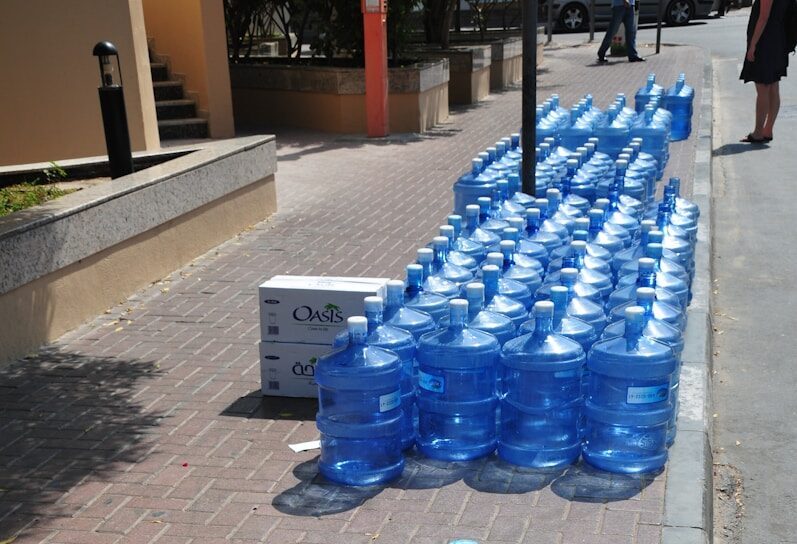
- bottled drinking water
- food that can be eaten without cooking
- a manual tin opener
- essential medication
- baby supplies where required
- food and water for pets.
Official guidance cites a minimum of around 2.5 to 3 litres of drinking water per person per day, while approximately 10 litres per person per day would provide greater comfort by allowing for basic cooking and hygiene as well.
Households don’t need to buy everything immediately.
Adding an occasional extra tin of food, bottle of water or packet of batteries to a normal supermarket shop can gradually create an emergency reserve without panic buying or a large one-off expense.
Why An Old-Fashioned Radio Could Be Surprisingly Important
Perhaps the strangest-looking recommendation in 2026 is a battery or wind-up radio.
After all, virtually everybody has a smartphone.
But smartphones depend upon infrastructure.
A prolonged electricity failure can take out home broadband, while mobile masts themselves require power.
The Government consequently recommends keeping a battery or wind-up radio because important information may still be broadcast when internet and mobile services are unavailable.
It also advises households to write important telephone numbers down on paper rather than relying exclusively on a mobile phone.
For England, Scotland and Wales, 105 is the number used to report a power cut.
Households Should Also Have An Emergency Plan
Preparedness isn’t only about tins of beans and bottles of water.
The Government recommends families decide what they would do if they couldn’t return home, identify a meeting point and keep important contact information somewhere accessible.
People should also consider neighbours who may need extra assistance, including elderly people, those with medical needs and people who may be digitally excluded.
People dependent on electrically powered medical equipment should make specific arrangements for what they would do during an extended outage.
Those eligible can also register for their utility provider’s Priority Services Register.
So How Resilient Is Britain?
The answer is probably more resilient than the most frightening headlines suggest – but potentially less resilient than many of us assume.
Britain has sophisticated emergency services, established government contingency arrangements, resilient infrastructure and considerable experience of responding to terrorism, flooding, storms, disease outbreaks and other emergencies.
Most emergencies would be dealt with without society grinding to a halt.
But Britain’s vulnerability comes partly from its sophistication.
Almost every aspect of modern life now relies on electricity and digital communications.
Our money is increasingly electronic.
Shopping increasingly relies on cards and smartphones.
Our food travels through complex national and international logistics networks.
Our heating systems need electricity.
Our communications depend on broadband and mobile networks.
Many people no longer routinely carry cash, keep substantial food stocks at home or even have a battery-powered radio.
Take several of those systems away simultaneously and an extremely advanced society can suddenly become surprisingly vulnerable.
Should UK Households Be Worried?
There is no reason to panic.
The likelihood of an event simultaneously disabling Britain’s electricity, communications, food distribution and water infrastructure remains low.
But low probability doesn’t mean zero probability.
More importantly, far more ordinary emergencies – severe storms, floods, local power cuts, water outages and transport disruption – happen regularly.
The preparations needed for those events happen to be almost identical to those required during something much more serious.
So the sensible message isn’t to build a bunker or fill the garage with baked beans.
It’s to make sure your family could comfortably manage for several days if the lights went out, the internet disappeared, the supermarket temporarily closed and your bank card stopped working.
Britain’s new emphasis on preparedness should therefore be viewed less as a warning that disaster is imminent and more as recognition that resilience begins before an emergency happens.
And perhaps the bigger question isn’t whether British households are ready.
Following the National Audit Office’s latest warning about food supply resilience, it is whether Britain itself would be ready if the worst really did happen tomorrow.
Sources
UK Government – National Risk Register update and resilience announcement:
National Risk Register announcement
UK Government – Emergency preparedness advice:
Prepare: Get prepared for emergencies
UK Government – Power cut preparedness:
Prepare: Power cuts
National Audit Office – Resilience of the food supply chain to disruptions:
NAO food supply resilience report
UK Government – Resilience Action Plan:
UK Government Resilience Action Plan




More Stories
King Charles ‘Said Diana Would Soon Be Forgotten’, Her Brother Claims in New Book
Amazon announces above-inflation pay rise – to a minimum starting salary of more than £31,000 for full-time UK operations employees
Could Putin Attack the UK? How Serious Is Russia’s Threat to Britain?