




Imagine a typical workday: keyboards clicking, coffee brewing, and meetings underway. Suddenly, a colleague collapses, chokes on their lunch, or suffers a severe cut. In those frantic first few minutes before emergency medical services arrive, the actions of your bystanders dictate the outcome.
First aid training is often viewed merely as a regulatory box to check. In reality, it is a critical investment in your company’s most valuable asset: its people. This guide outlines why workplace first aid training is essential and how to implement an effective programme.
Why First Aid Training Matters
The primary goal of first aid is to save lives, but the benefits to a business extend far beyond compliance.
- Minimising Workplace Injuries: Trained employees are more safety-conscious. They learn to recognise workplace hazards and mitigate risks before accidents occur.
- Faster Response Times: When an incident happens, seconds matter. A trained team can administer CPR, use an automated external defibrillator (AED), or control severe bleeding immediately, drastically improving survival rates.
- Boosting Employee Morale: Providing high-quality safety training shows your team that you genuinely care about their well-being. This fosters a culture of mutual care and trust, which can improve retention and job satisfaction.
Step 1: Conduct a First Aid Needs Assessment
Before booking a course, you need to understand your specific workplace risks. A tech startup with remote workers has vastly different safety needs than a manufacturing plant or a busy restaurant.
Consider the following factors during your assessment:
- The Nature of the Work: Are employees handling hazardous chemicals, heavy machinery, or sharp objects?
- Workplace Size and Layout: If your office spans multiple floors or buildings, you will need trained first aiders distributed evenly across all areas.
- Proximity to Medical Care: If your business is located in a remote area far from the nearest hospital, your team may need advanced training to manage emergencies for extended periods.
Step 2: Choose the Right Level of Training
First aid courses are not one-size-fits-all. Depending on your assessment, you will generally choose between two primary standards:
- Emergency First Aid at Work (EFAW): This is typically a one-day course ideal for low-risk environments (like retail shops or standard offices). It covers basic life-saving skills, including CPR, managing a choking victim, treating minor wounds, and handling unconsciousness.
- First Aid at Work (FAW): A more comprehensive, three-day course designed for higher-risk environments (like construction sites or factories). It includes everything in the EFAW curriculum, plus how to handle fractures, spinal injuries, severe burns, and sudden medical emergencies like heart attacks or strokes.
Step 3: Select a Reputable Training Provider
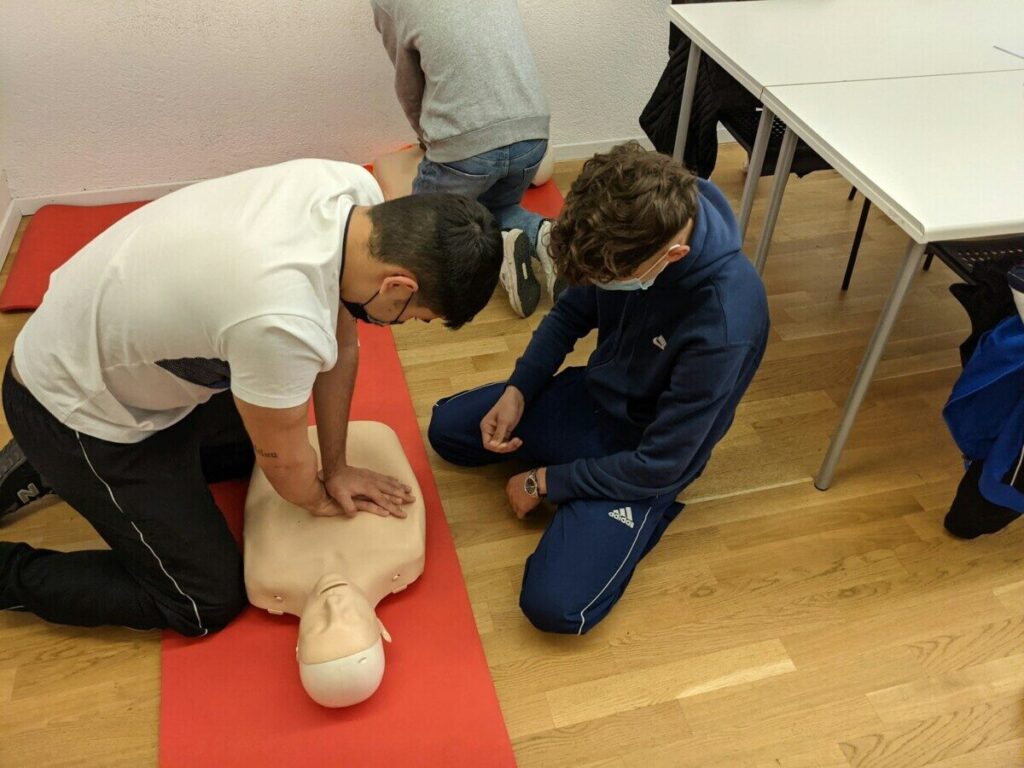
Ensure the training provider you choose is fully accredited by a recognised national safety body or registry. Look for courses that offer hands-on practice. Reading a manual is not enough; your employees need to physically practice chest compressions on manikins and practice bandaging techniques to build true muscle memory. Boss Training provides emergency first aid training which is valid for up to 3 years.
Step 4: Maintain and Refresh Skills
First aid skills degrade quickly over time. Certification typically lasts for two to three years, but annual refresher courses are highly recommended to keep skills sharp. Additionally, ensure your first aid kits are regularly checked and restocked and that all employees know exactly where they are located.
Empowering Your Workplace
Emergency first aid training transforms your workforce from passive bystanders into a proactive, life-saving team. By assessing your risks, choosing the right training, and fostering a culture of preparedness, you ensure that if crisis strikes, your business is ready to respond.




More Stories
Coleg Cambria powers business growth and skills revolution across North Wales
Rapid Fusion fires up Prometheus launch with new international collaboration
Lawyer calls for action ahead of International Day to end Violence Against Women